When homeowners think about septic system maintenance, weather is often overlooked. However, environmental conditions play a significant role in how well your drainfield functions. Because the drainfield is the final stage of wastewater treatment, any disruption can quickly affect the entire system.
From heavy rainfall and drought to freezing temperatures and extreme heat, weather conditions directly influence soil performance, microbial activity, and drainage capacity. When soil cannot properly absorb and filter wastewater, problems such as backups, odors, surface pooling, and groundwater contamination can occur.
This guide explains how different weather conditions affect your drainfield and outlines practical steps you can take to reduce the risk of damage year-round.
Heavy Rainfall and Drainfield Performance
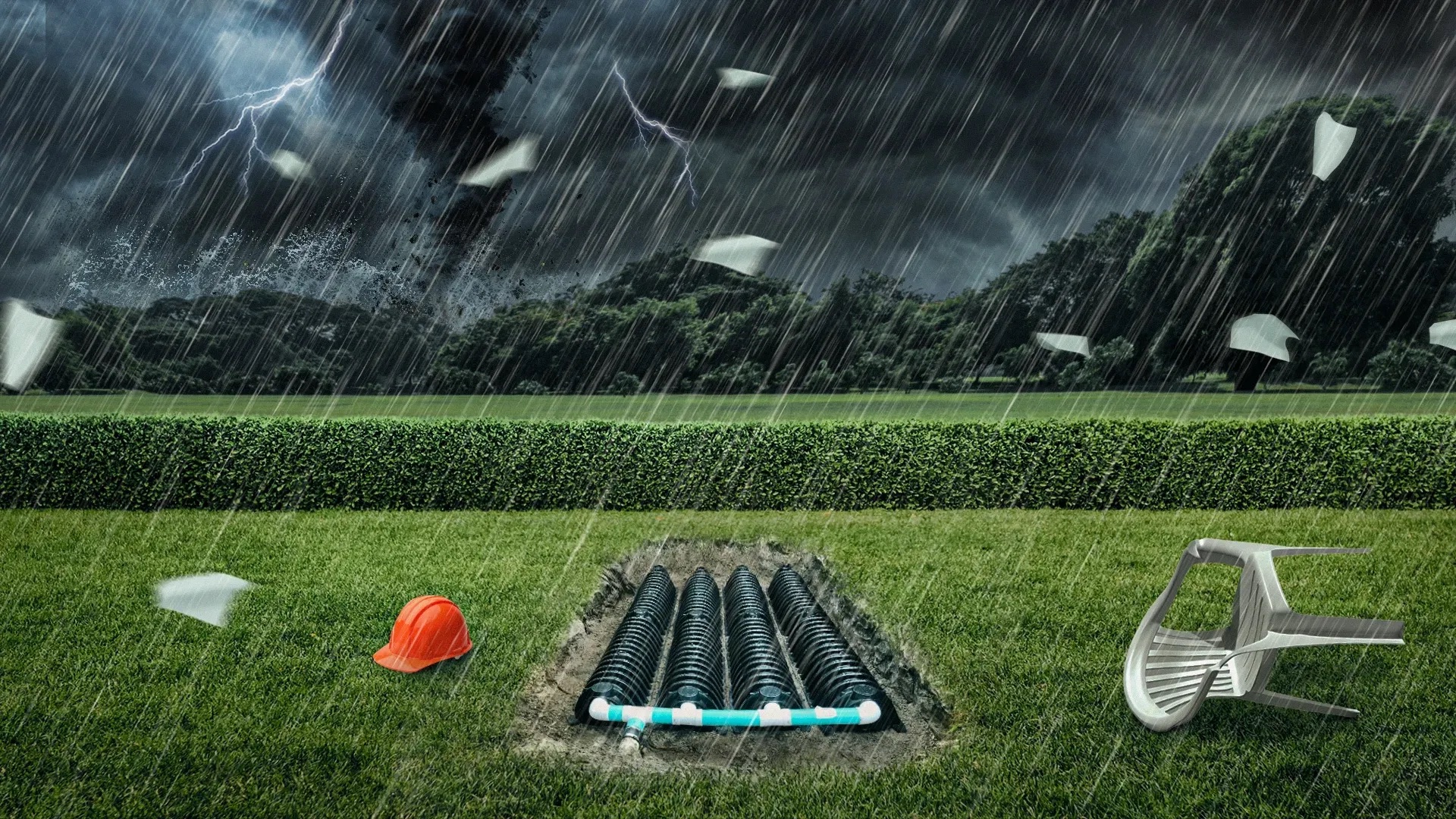
Excessive rainfall is one of the most common causes of drainfield problems.
Why Heavy Rain Is a Problem
Drainfields rely on unsaturated soil to absorb and treat wastewater. When soil becomes waterlogged, it loses its ability to accept additional effluent. As a result:
-
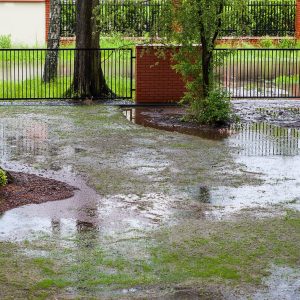
Wastewater may surface in the yard
-
Drainage inside the home may slow or back up
-
Foul odors may develop
-
Contaminants can migrate into nearby groundwater or surface water
These conditions are more than inconvenient—they can pose environmental and health risks.
How Heavy Rain Causes Failure
During prolonged rainfall:
-
Soil pores fill with water, reducing oxygen levels
-
Beneficial bacteria responsible for wastewater treatment become less effective
-
Effluent has nowhere to disperse and begins to pool or back up
How to Reduce Drainfield Damage During Wet Conditions
Improve Surface Drainage
-
Redirect gutters and downspouts away from the drainfield
-
Prevent driveway or landscape runoff from flowing toward the system
-
Maintain grading that encourages water to move away from the drainfield
Reduce Household Water Use During Storms
-
Avoid running washing machines and dishwashers during heavy rain
-
Delay long showers or baths
-
Repair leaking fixtures promptly
Reducing water input gives saturated soil time to recover.
Schedule Routine Inspections
Regular inspections help identify early signs of oversaturation, uneven effluent distribution, or restricted flow before major damage occurs.
Drought, Soil Compaction, and Heat Stress
Dry weather can be just as damaging as excess rain—often in less obvious ways.
What Happens During Drought or Extreme Heat
-
Soil dries, shrinks, and becomes compacted
-
Air spaces needed for microbial treatment disappear
-
Wastewater infiltrates more slowly
-
Drainage issues may appear suddenly when rain returns
Compacted soil reduces oxygen availability, weakening biological treatment and increasing system strain.
Protecting Your Drainfield During Dry Conditions
Maintain Slight Soil Moisture
-
Lightly water the drainfield during extended drought
-
Keep soil damp—not saturated
-
Avoid overwatering or pooling
Prevent Soil Compaction
-
Keep vehicles, equipment, and heavy storage off the drainfield
-
Avoid foot traffic during dry periods
-
Use lightweight lawn equipment if mowing is necessary
Monitor System Performance
Watch for slow drains, odors, or surface dampness during prolonged heat or drought, and address concerns early.
Can a Drainfield Freeze?
Yes. Frozen soil can completely block wastewater absorption.
What Happens When a Drainfield Freezes
-
Soil stops absorbing effluent
-
Wastewater backs up into the tank or home
-
Pipes may freeze or crack
-
Sewer gases may enter indoor spaces
Shallow systems, compacted snow, and bare soil are particularly vulnerable.
Preventing Freeze-Related Drainfield Problems
Insulate the Soil
-
Apply 8–12 inches of mulch, straw, or leaves over the drainfield before freezing weather
-
Focus on shallow pipes and outlet areas
Avoid Snow Compaction
-
Allow snow to remain undisturbed over the drainfield
-
Do not plow, shovel, walk, or drive over the area
Snow acts as insulation when left fluffy and uncompacted.
Reduce Water Surges in Winter
-
Spread out laundry and water-intensive tasks
-
Keep water use consistent rather than intermittent surges
-
Fix leaks immediately
Extreme Heat and Microbial Decline
High temperatures accelerate evaporation and dry soil rapidly.
Why Heat Causes Problems
-
Soil loses moisture needed for bacterial activity
-
Wastewater filtration slows
-
Odors and drainage issues may increase
Heat-Related Prevention Tips
-
Lightly water soil during heat waves
-
Maintain grass or shallow-rooted vegetation for shade
-
Never cover the drainfield with impermeable materials
Year-Round Drainfield Protection Strategies
Regardless of the season:
-
Use water efficiently
-
Keep surface water away from the system
-
Avoid compaction and heavy loads
-
Monitor warning signs early
-
Schedule regular inspections and pumping
Weather plays a critical role in septic system health—especially when it comes to the drainfield. Heavy rain, drought, freezing temperatures, and extreme heat can all reduce soil effectiveness and lead to system failure if not managed properly.
By understanding how weather affects your drainfield and taking preventive steps throughout the year, you can reduce risk, extend system life, and avoid costly repairs.
A well-maintained drainfield isn’t just about what goes into your system—it’s also about what’s happening above and around it.