
For properties not connected to municipal sewer systems, septic systems are a critical part of wastewater treatment. However, not all septic systems are the same. Different system types are designed to accommodate varying soil conditions, property layouts, and environmental requirements. Understanding these systems—and their expected lifespan—can help property owners make informed decisions about installation, maintenance, and long-term planning.
Below are five common types of septic systems, how they function, and how long they typically last when properly maintained.
1. Conventional Septic System
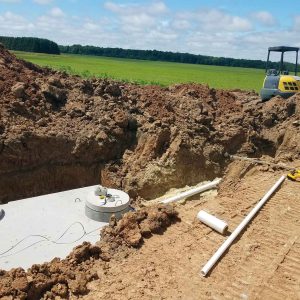
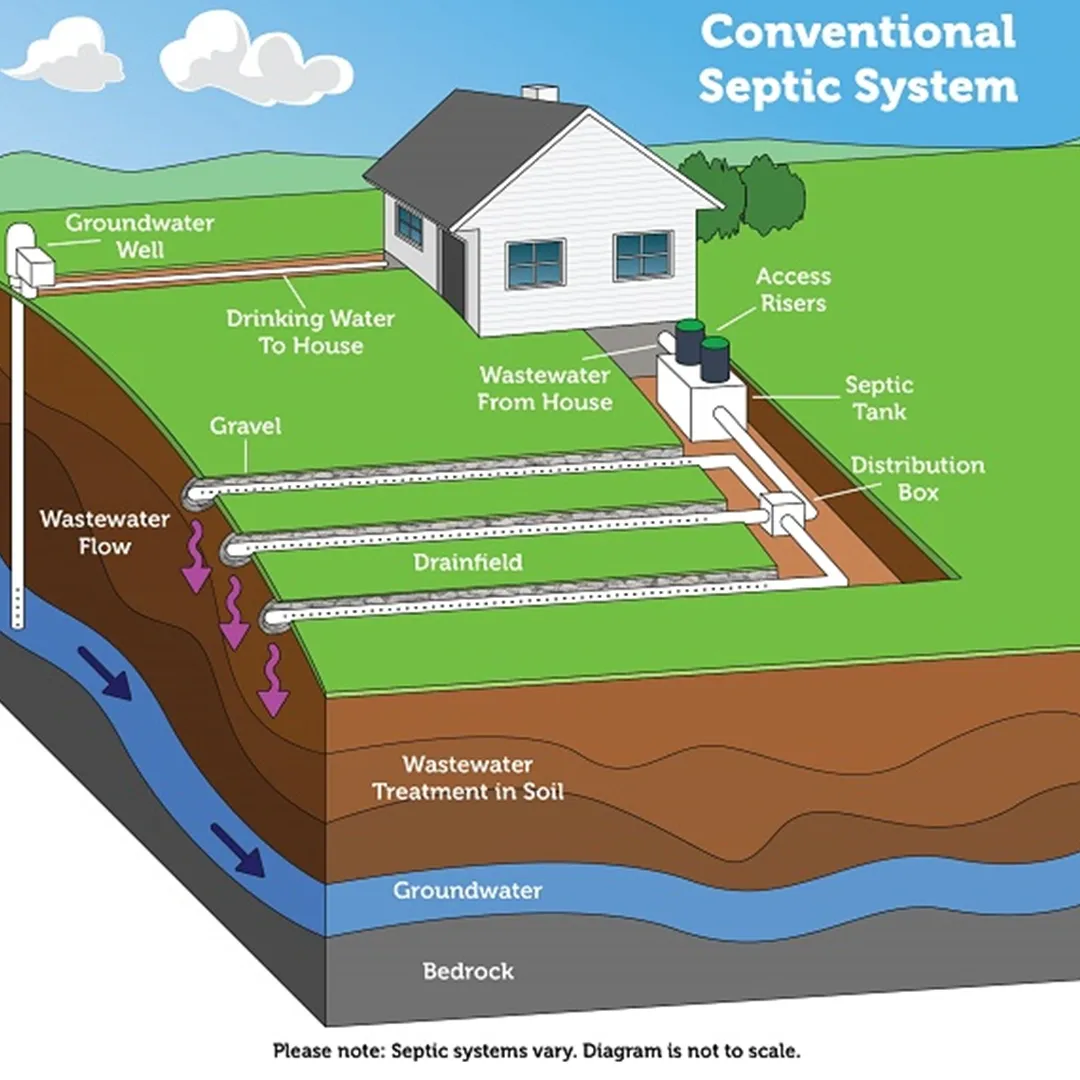
A conventional septic system consists of a septic tank and a gravel-filled drainfield. Wastewater flows into the tank, where solids settle at the bottom and lighter materials rise to the surface. The liquid effluent then flows into the drainfield, where it is naturally filtered by the surrounding soil.
- Typical lifespan: 20–40 years with proper maintenance
- Best suited for: Properties with well-draining soil and sufficient yard space
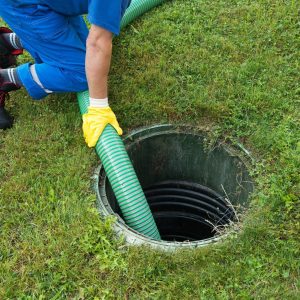
- Maintenance considerations: Regular pumping every 3–5 years helps prevent solids from entering and clogging the drainfield
2. Aerobic Septic System
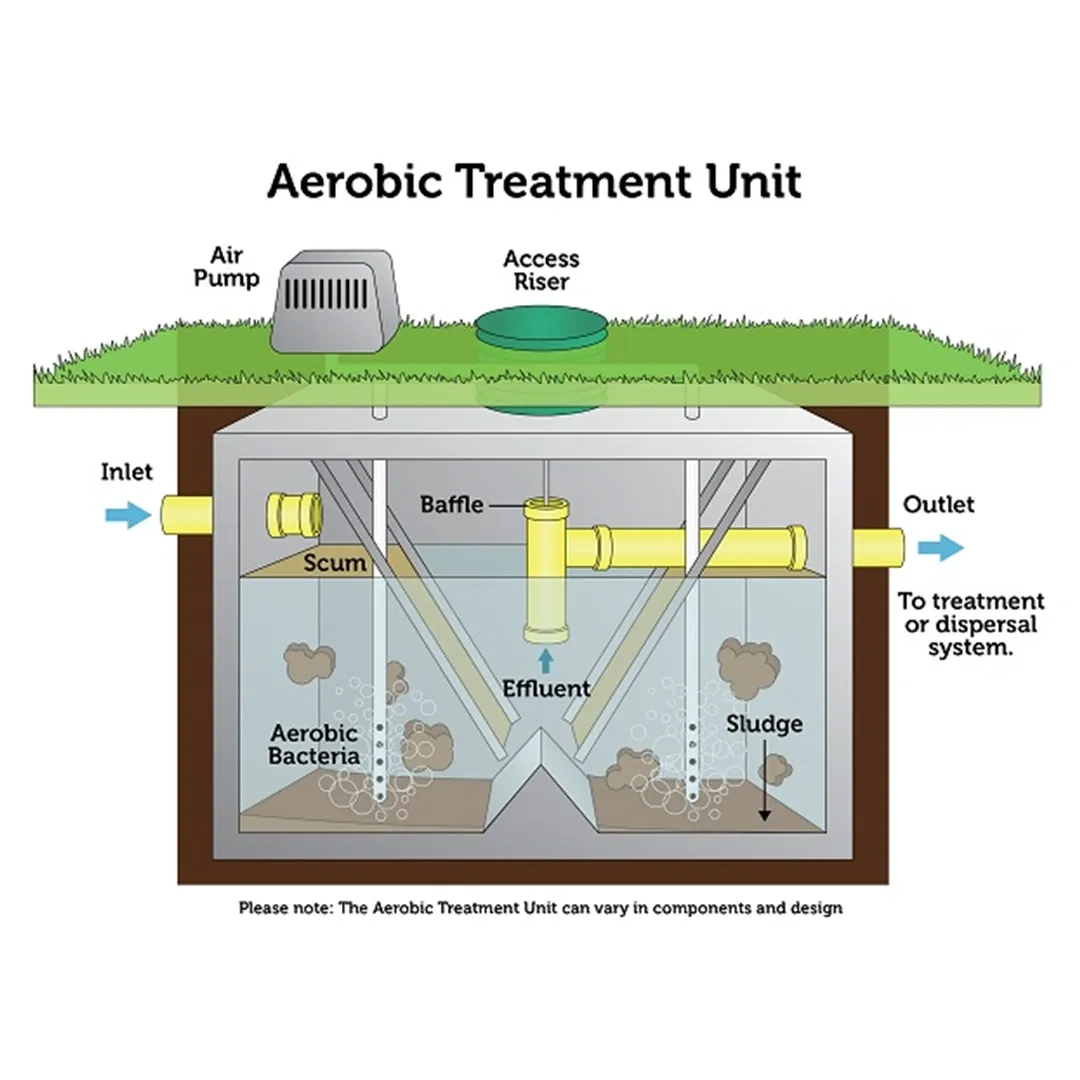
Aerobic septic systems introduce oxygen into the treatment process, encouraging aerobic bacteria to break down waste more efficiently than anaerobic systems. These systems function similarly to small wastewater treatment plants and provide a higher level of treatment before effluent reaches the drainfield.
- Typical lifespan: 20–40 years
- Best suited for: Properties with poor soil absorption, limited space, or high groundwater levels
- Maintenance considerations: Requires routine inspections, aerator maintenance, and more frequent servicing than conventional systems
3. Mound Septic System
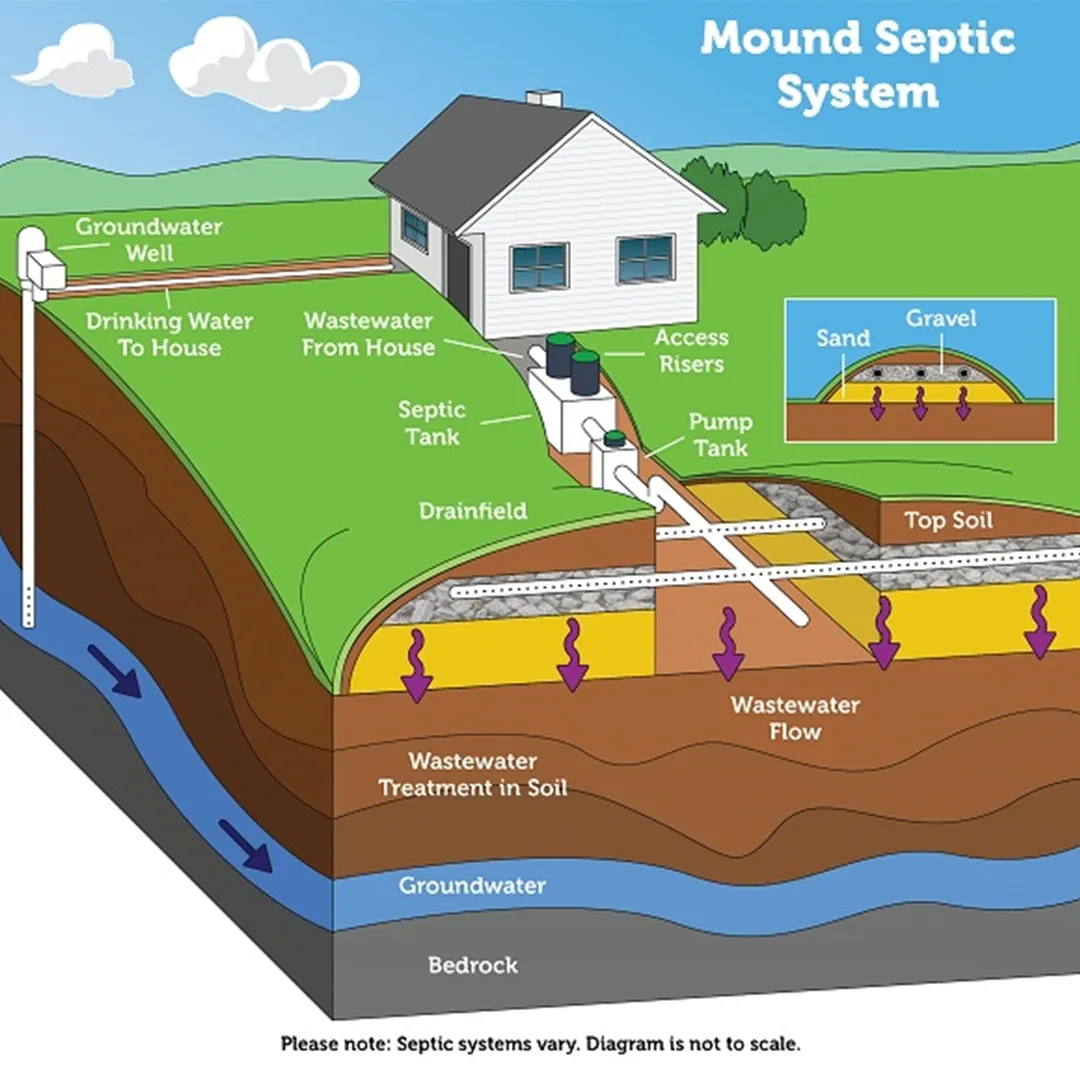
Mound systems are designed for locations where soil depth is insufficient for a traditional drainfield. Wastewater is pumped into a raised sand mound, where treatment and filtration occur before dispersal into the natural soil.
- Typical lifespan: 20–30 years
- Best suited for: Areas with shallow bedrock, clay soils, or high water tables
- Maintenance considerations: Regular inspections and controlled water usage are critical to prevent system overload
4. Sand Filter System
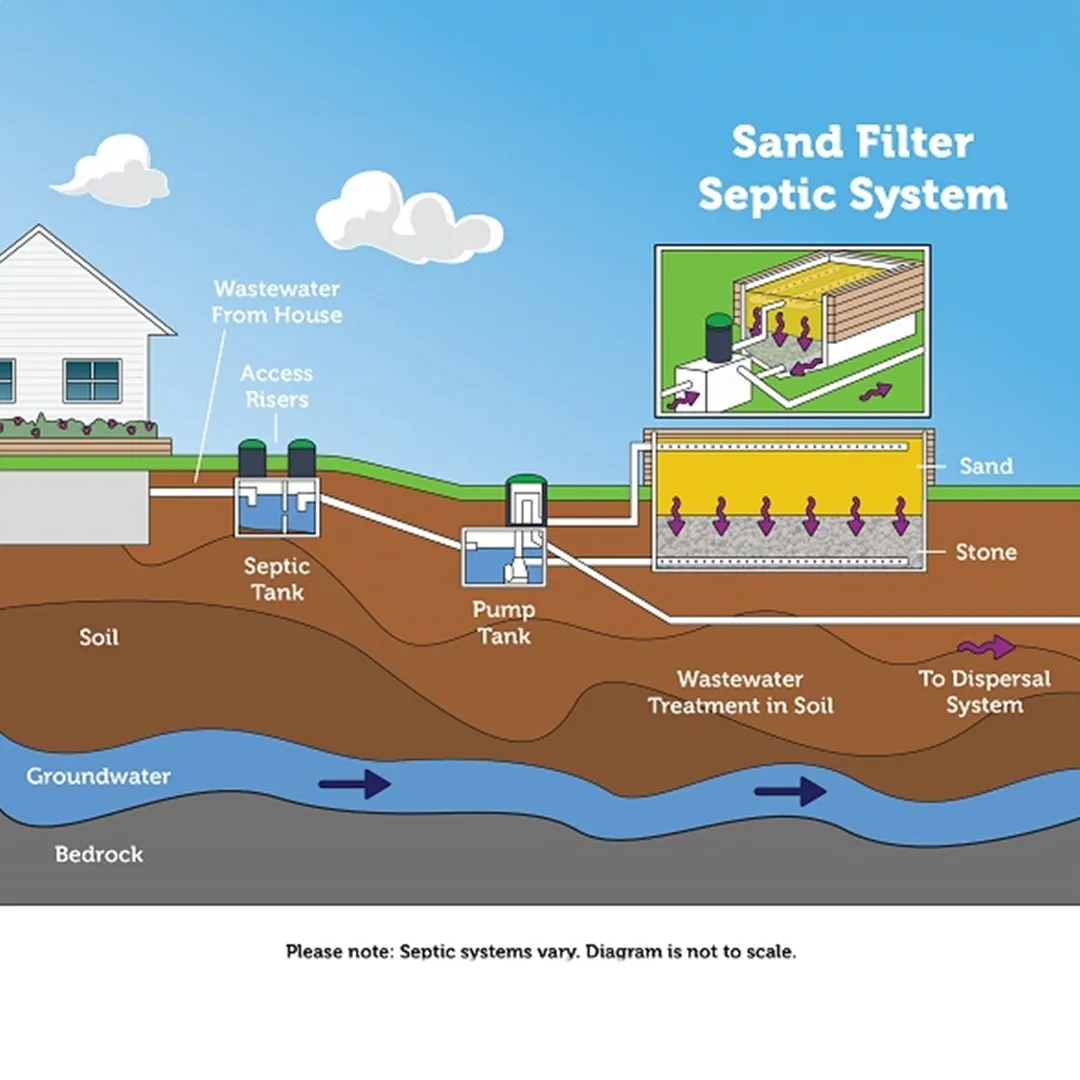
A sand filter system adds another layer of treatment by routing effluent through a sand bed before it reaches the drainfield. This system is ideal when natural soil is unsuitable for filtering wastewater effectively.
- Lifespan : 20–30 years
- Best for : Properties in Dahlgren, Mineral , or other regions with dense or rocky soil
- Maintenance Needs : Occasional sand replacement and routine filter inspections.
5. Drip Distribution System
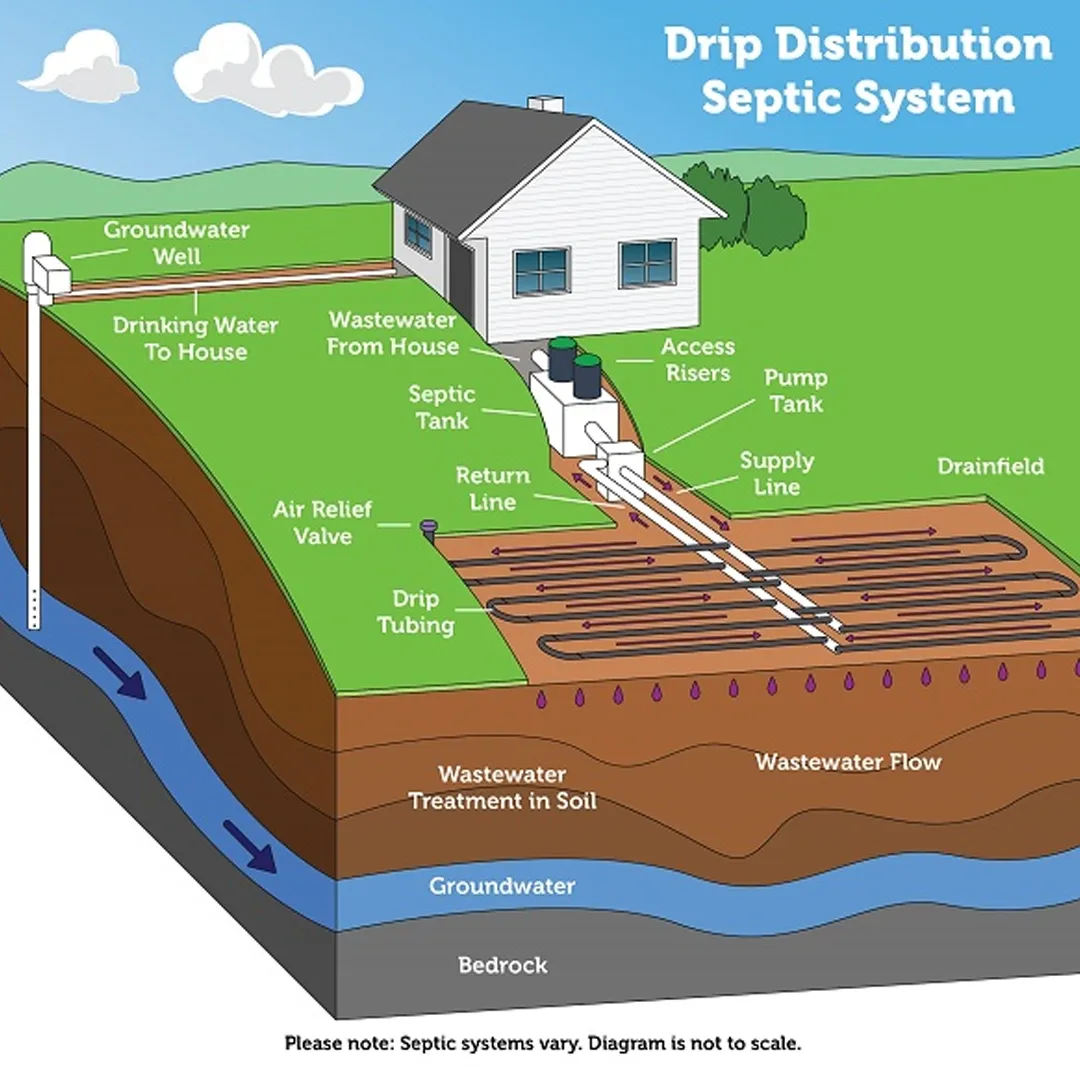
Drip distribution systems use a network of small-diameter tubing to disperse treated wastewater slowly and evenly into the soil. These systems often include advanced pre-treatment components and allow for precise control of effluent dispersal.
Typical lifespan: 25–40 years
Best suited for: Properties with limited space, sloped terrain, or clay-heavy soil
Maintenance considerations: Requires regular filter cleaning and monitoring of pumps and emitters
Factors That Affect Septic System Lifespan
While the system type establishes an expected lifespan range, several external factors influence how long a septic system actually lasts.
1. Installation Quality
Proper design, soil evaluation, and installation significantly impact long-term performance. Incorrect placement or inadequate sizing can shorten system lifespan.
2. Soil Conditions
Soil that drains too slowly can cause saturation, while soil that drains too quickly may fail to adequately filter wastewater. Both extremes increase the risk of system failure.
3. Water Usage
Excessive or concentrated water use places strain on the system. Spreading water usage throughout the day and week helps prevent hydraulic overload.
4. Maintenance Practices
Skipping routine pumping, flushing non-biodegradable materials, or introducing grease and chemicals into the system accelerates wear and failure.
Signs a Septic System May Be Near the End of Its Life
Septic systems degrade gradually, but warning signs may indicate that repair or replacement is needed:
-
Persistent sewage odors near the drainfield
-
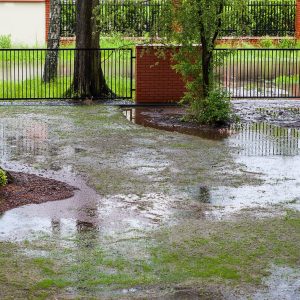
Soggy or saturated soil without recent rainfall
-
Repeated plumbing backups or slow drains
-
Elevated nitrate levels in nearby well water
-
A system age exceeding 25–30 years
Early evaluation can help determine whether repair is possible or full replacement is necessary.
Repair vs. Replacement Considerations
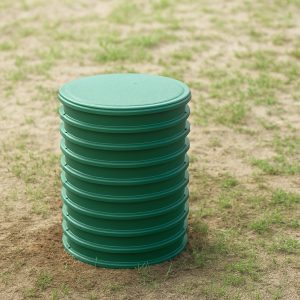
Minor issues such as damaged baffles, clogged filters, or cracked access lids are often repairable. However, extensive drainfield failure, structural tank deterioration, or undersized systems typically require replacement. Professional inspection is essential for determining the most cost-effective and compliant solution.
Understanding the type of septic system installed on a property—and how it is expected to perform over time—plays a key role in long-term wastewater management. With proper system selection, responsible water usage, and consistent maintenance, many septic systems can operate reliably for decades. Awareness of system type, soil conditions, and warning signs allows property owners to protect their investment and avoid unexpected failures.